Malaysia must move beyond consuming AI and start building solutions: Teo
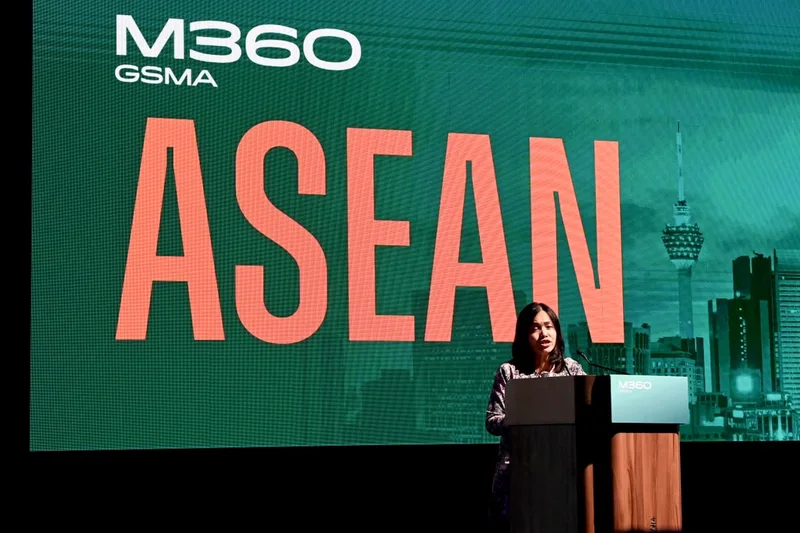
Deputy minister says local businesses, SMEs and start-ups must develop AI innovations for Malaysia and the wider Asean market
KUALA LUMPUR – Malaysia must move beyond simply consuming artificial intelligence (AI) technologies and focus on developing home-grown solutions that can be deployed and scaled across the Asean market, said Deputy Communications Minister Teo Nie Ching. She said Malaysia’s AI ambitions must be supported by strong digital foundations, including connectivity, computing capacity, cloud and data infrastructure, as well as intelligent, resilient and secure networks, Bernama reported. “Malaysia must provide the foundations for corporations, SMEs and start-ups to develop, deploy and scale AI solutions for Malaysia and the wider Asean market,” she said in her closing remarks at the M360 Asean 2026 session titled ‘AI-First Enterprises: Driving Innovation and Business Transformation’ here today. Teo said AI was no longer merely a technology adopted by businesses, but a fundamental capability that would determine how companies compete, innovate and create value. She said businesses across Asean were moving beyond experimentation by rethinking their operations, workforce models and decision-making processes as AI became increasingly integrated into their activities. “Malaysia already has a strong connectivity base, with Internet coverage in populated areas reaching 99.75% as of July 31, 2026 under JENDELA, while the continued 5G rollout and SALAM submarine cable are adding capacity and resilience,” she said. Teo said becoming an AI-first nation must also mean becoming “people-first”, as AI would reshape jobs, skills requirements and the way organisations operate. She said continuous reskilling and upskilling would be needed to prepare Malaysians for an AI-enabled economy. “The success of AI should therefore be measured not only by technological sophistication, but by how widely its benefits are shared. SMEs and communities must also be able to participate in the transformation,” she said. Teo said innovation must progress alongside trust as AI became increasingly embedded in business operations and decision-making. She said privacy, cybersecurity, transparency and accountability would become even more important as organisations expanded their use of AI. “For businesses, responsible AI is more than compliance; trust will increasingly be a competitive advantage. The scale of this challenge reminds us that as technology scales, accountability and safeguards must scale with it,” she said. On regional opportunities, Teo said Asean’s digital economy could reach as much as USD2 trillion by 2030 with effective implementation of the Asean Digital Economy Framework Agreement (DEFA). She said this made it important for countries in the region to look beyond their domestic markets and work together to capture AI-driven opportunities. Teo said AI provided Malaysia with an opportunity to build on its existing digital ecosystem and create the next phase of productivity and economic growth. She noted that Malaysia’s information and communications technology (ICT) and e-commerce sectors contributed RM451.3 billion, or 23.4% of the economy, in 2024. “Malaysia's transformation is anchored in its ambition to become an inclusive and sustainable AI Nation by 2030, focusing on strengthening competitiveness, developing ‘Made by Malaysia’ solutions, building digital trust and ensuring AI's benefits are shared across society. “The ambition is being translated into action through the National AI Action Plan 2026-2030, a five-year roadmap adopting a whole-of-nation approach across government, business and the rakyat, supported by 28 national initiatives covering areas including talent, research, data and compute, and governance,” she said. At the Asean level, Teo said the Asean Responsible AI Roadmap 2025-2030 and Asean AI Safety Network (Asean AI SAFE) would strengthen regional cooperation while helping member states advance innovation alongside skills development, inclusion, governance and risk management. “Malaysia and Asean do not see innovation and responsibility as competing objectives. Trust, safety and interoperability give businesses greater confidence to invest, innovate and scale AI across our region,” she said. Teo added that Asean should not merely prepare for an AI-first future, but play a role in shaping it. M360 Asean 2026, organised by GSMA Asia Pacific on Sept 9 and 10, brings together ministers, regulators and industry leaders to discuss digital trust, artificial intelligence, resilient infrastructure and regional digital integration. The event, held for the first time in the Asean region and Malaysia, is endorsed by the Communications Ministry, with the Malaysian Communications and Multimedia Commission (MCMC) as host partner. - September 10, 2026 The post Malaysia must move beyond consuming AI and start building solutions: Teo appeared first on Scoop .
This is a brief of a report by another newsroom. The excerpt below is from the original.
Related stories
-
Syed Azman raises HHRG stake after taking chairman's seat Business9/10 20:56
-
Ringgit firmer against US dollar ahead of CPI data Business9/10 18:27
-
MOH Suspends Flying Doctor Service In Sarawak Pending Safety Reviews Business9/10 17:14
-
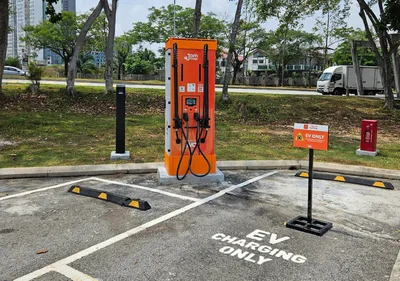
JomCharge turns on 100kW DC Charger at McDonald's Kota Emerald in Rawang Business9/10 17:08


About this story
- Source
- Scoop
- Originally published
- Sep 10, 2026
- Updated here
- Sep 10, 2026
- Produced by
- Malaysia Times desk (brief) — reporting by the source
- Corrections
- Corrections log · Report an error