Govt to use net disposable income to determine aid eligibility from 2027
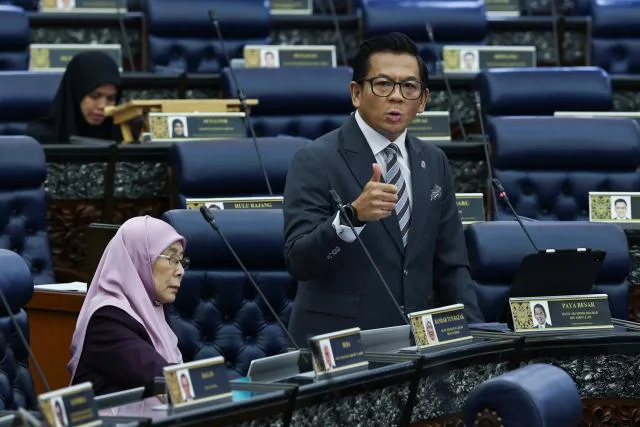
The NDI approach will not rely on gross monthly income alone but minus statutory deductions, essential living costs, medical needs and the number of dependents, among other factors
KUALA LUMPUR — From next year, Putrajaya will begin using the Net Disposable Income (NDI) approach to assess eligibility for aid, taking into account demographic factors and liabilities, and moving away from gross monthly income as the sole determinant. Deputy Economy Minister Datuk Seri Mohd Shahar Abdullah said the NDI approach is more equitable, as it considers basic expenditures and sociodemographic factors when evaluating a household's financial standing. “The government will ensure that everything we implement takes into account not only the lower-income group but also encompasses the entire spectrum of Malaysian society,” he said during a question-and-answer session in the Dewan Rakyat today. Using NDI would mean considering a household’s or income earner’s statuary deductions, essential living expenses, medical needs, the number of dependents including elderly family members, and geographical location. “The Economy Ministry is currently in discussions with relevant agencies to implement a pilot project aimed at understanding the impact of adopting the NDI approach on the nation’s fiscal position," he said, Bernama reports. Citing data from the 2024 Household Income Survey conducted by the Department of Statistics Malaysia (DOSM), the M40 group, for example, has a monthly gross income ranging from RM5,860 to RM12,679, with an average of RM8,744 per month. However, in terms of expenditure, the M40 group spends nearly 70 per cent of their income on basic costs. This breaks down to 22.7 per cent for housing and utilities, 34.1 per cent for food, and 10.6 per cent for transportation. “After accounting for medical protection commitments, the remaining income at the end of the month is very little,” Mohd Shahar said. The deputy minister was replying a supplementary question from Datuk Seri Jalaluddin Alias (BN-Jelebu) whether the government had plans for specific action to strengthen the economic position of the middle class. Mohd Shahar said policy-making cannot rely solely on gross income estimates. While awaiting the finalisation of the new measurement methodology, Mohd Shahar said the government, through Budget 2027, has introduced measures to alleviate the burden on the public, including the middle class, covering areas such as housing, education, healthcare, taxation and wages. He said some government aid has begun shifting toward a wider approach, such as Budi95 and the Early Schooling Assistance, which benefits Malaysians in general, including the middle class. Regarding the income thresholds for the B40, M40, and T20 categories, he said these limits are adjusted based on household income and expenditure surveys, which are conducted twice during each Malaysia Plan. For instance, Mohd Shahar noted that the income range for the M40 group increased from RM5,250–RM11,819 in 2022 to RM5,860–RM12,679 in 2024. The next survey will be carried out in 2027, with the results to be published in 2028, he added. - October 26, 2026 The post Govt to use net disposable income to determine aid eligibility from 2027 appeared first on Scoop .
This is a brief of a report by another newsroom. The excerpt below is from the original.
Related stories
-
Marshall Bromley 150 Portable Party Speaker Launches In Malaysia Politics1h ago
-
Samsuri: States should have greater say in infrastructure priorities Politics10/26 13:31
-
16 years of Little India, Brickfields: A glorious past and an enduring legacy – M. Saravanan Politics10/26 09:36
-
Sarawak election clock starts, EC to set polling date within 60-day deadline Politics10/26 09:11




About this story
- Source
- Scoop
- Originally published
- Oct 26, 2026
- Updated here
- Oct 26, 2026
- Produced by
- Malaysia Times desk (brief) — reporting by the source
- Corrections
- Corrections log · Report an error