Computing expert offers privacy protection tips when using Waze

Universiti Utara Malaysia academic says the public, who aren’t bound by the ban on civil servants from using the navigation app on official duty, can reduce exposure of their personal data and movement patterns
KUALA LUMPUR —Members of the public, who are still free to use the Waze navigation app, can take precautions by reviewing their privacy and location settings in the app and in their smartphone. Universiti Utara Malaysia (UUM) Assistant Vice-Chancellor of the College of Arts and Sciences (CAS) and Dean of the School of Computing (SOC), Professor Dr Osman Ghazali, said the could help minimise the exposure of personal data. “Users should change their location permission settings from ‘Always Allow’ to ‘Only While Using the App’, ensuring that an application can access their location only when it is actively being used,” he said. He also cautioned that the "Invisible Mode" feature in navigation apps did not necessarily prevent service providers from collecting users' movement data, as it merely concealed their vehicle icons from other users on the public map. He advised users to periodically delete their search and trip histories, disconnect unnecessary social media account links, and keep their device operating systems updated to strengthen personal data protection. Osman was speaking on Bernama TV’s Fokus 15 programme, titled “Navigation Apps: Is Our Data Safe?” today. He said location data is more than just travel information, as it can reveal individuals' movement patterns. For civil servants and national leaders, this turns location data into a cybersecurity issue and a national data sovereignty concern, he added. Osman said he viewed the government’s ban on civil servants using Waze for official duties as a preventive measure to minimise the risk of exposure of sensitive information. “In the context of cybersecurity, location data is sensitive information because it can reveal an individual’s movement patterns, especially those of people holding key positions,” he said. Cybersecurity risk management involved taking preventive measures rather than action only after a breach or data leak had occurred, he added. On the potential of local navigation applications such as TuJu, Osman said such initiatives could strengthen the country’s digital sovereignty, but their adoption would depend on their ability to provide services comparable to those of existing applications. “Local applications must not only be accurate in terms of navigation, but also capable of providing real-time traffic information, operating stably, and ensuring the security of user data,” he said. He said such applications should provide accurate estimated arrival times, suggest suitable alternative routes, and remain stable even when faced with sudden surges in user numbers. Osman also proposed incorporating features tailored to Malaysian users' needs, including highway traffic updates, toll plaza information, rest and service areas (R&R), electric vehicle (EV) charging station locations, flood alerts and an emergency assistance button. He said a key challenge in encouraging users to switch to local applications was their familiarity with existing platforms. Therefore, technological improvements, the involvement of local experts and user feedback were essential to enhancing performance and public confidence. - October 26, 2026 The post Computing expert offers privacy protection tips when using Waze appeared first on Scoop .
This is a brief of a report by another newsroom. The excerpt below is from the original.
Related stories
-
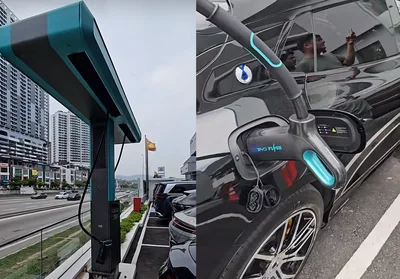
BYD Flash Charging spotted in action at Denza Balakong, official launch happening soon? General10/26 20:01
-
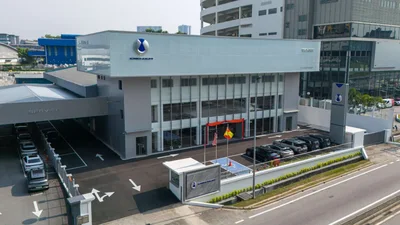
Denza launches new 4S centre in Balakong – operated by Wing Hin Elegant; brand's eighth outlet in Malaysia General10/26 12:36
-
Touch 'n Go Drops Pokémon Blind Packs: RM29 Luck, RM232 Guarantee General10/25 03:23
-
Nilai records highest API; 21 other locations at unhealthy levels General10/24 08:40


About this story
- Source
- Scoop
- Originally published
- Oct 26, 2026
- Updated here
- Oct 26, 2026
- Produced by
- Malaysia Times desk (brief) — reporting by the source
- Corrections
- Corrections log · Report an error