Beasley blames fragmented system for Malaysia’s failure to develop elite cyclists
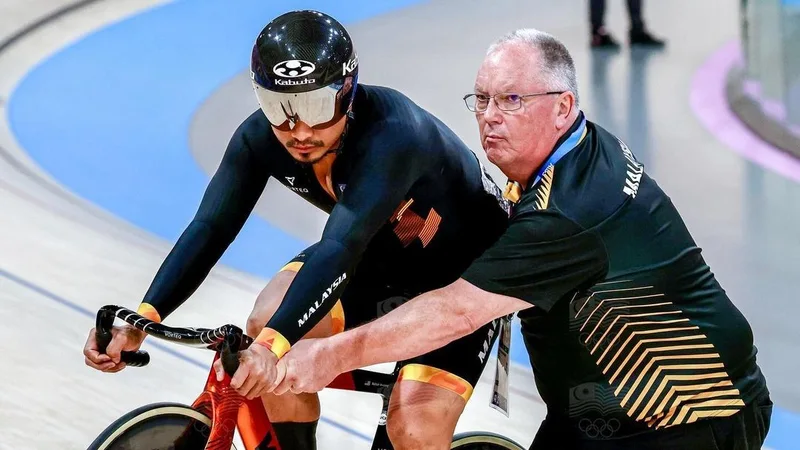
Outgoing national cycling technical director says poor coaching education, disconnected state and national programmes, and a lack of long-term support for young riders are undermining Malaysia’s talent pipeline
KUALA LUMPUR — Malaysia’s failure to produce a steady stream of elite cyclists stems from a fragmented development system and is not simply a coaching problem, said outgoing national cycling technical director John Beasley. Speaking to Scoop, Beasley who claims "hundreds of proposals" to improve the sport have gone unheeded, said his role focused on high performance rather than grassroots development, which he argued was the responsibility of the states. He identified poor coaching education and a lack of coordination between state programmes and the national set-up as major obstacles to producing international-calibre athletes. “My job was in high performance, so my job wasn't development at all. That was the state's job. When the states don't do their development properly, you don't get good athletes,” he said. Beasley said many state coaches lacked the knowledge required to develop young riders, arguing that better education and continuing professional development were essential to raising standards. “The problem is the education system in the states. Most of the coaches are probably good, but around 80% of them have very little knowledge compared with the rest of the world. The standard is very, very low,” he said. “The knowledge simply isn't there,” he added, arguing that Malaysia needed to ensure coaches continually upgraded their skills and understanding of the sport. Beasley said the lack of coordination across the system had made it difficult to establish a clear pathway from junior development to the senior national team. “The problem in Malaysia is that nothing connects. The system is fragmented. When I became technical director, I discovered how disconnected everything was,” he said. He claimed to have submitted "hundreds of proposals" over the past two decades, but said they had not been implemented. He also highlighted a structural divide between state coaches, who are employed through state National Sports Council (NSC) programmes. “I've written hundreds of papers over the past 20 years and tabled them, but nothing has ever been acted upon. There's a blueprint for everything,” he said. Beasley said the federation has no authority over the appointment of state coaches, making it harder to align their work with the national programme’s high-performance requirements. “The federation has no say over who is appointed to those positions,” he said. He also criticised the emphasis on the Malaysia Games (Sukma), claiming states often stopped supporting athletes once they aged out of the under-21 competition cycle instead of helping them progress towards senior competition. “As soon as they become too old for the next Sukma cycle, they are dropped. They could be 18, 19 or 20, but once they're too old for the under-21 category, the states no longer want them because they're no good for the next Sukma cycle,” he said. Beasley argued that the approach left promising riders without sustained support at a crucial stage of their development, weakening the supply of athletes available to the national programme. “They're not interested in feeding our national programme,” he said of the state programmes. He said Malaysia needed a more coherent long-term strategy, with better-educated coaches and continued investment in young athletes beyond junior competitions. He also defended the standards used to assess riders entering the national high-performance programme, saying these were based on Australia’s under-17 national programme. “We've established minimum standards based on the under-17 national programme in Australia. These are the standards that under-19 and under-23 athletes must meet to enter the Malaysian programme,” he said. Beasley questioned how athletes could progress to the international level if they did not meet those benchmarks, arguing that high-performance sport required clear standards and realistic assessments of ability. “If an under-19 or under-23 athlete cannot meet the standards of an under-17 athlete in Australia, am I the bad person for saying they aren't good enough? Come on, how is that athlete ever going to make it?” he said. Despite the shortcomings he described, Beasley said Malaysia had progressed during his tenure, winning medals at world and Olympic level, as well as at the Commonwealth and Asian Games. He said his legacy should be judged not only by medal tallies but also by the system built to support athletes. “I don't care about the medals we won. It's always been about the system we could build,” he said, adding that Malaysia’s progress would be difficult to sustain without better coordination between state and national programmes and a clear pathway from junior development to elite competition. - October 19, 2026 The post Beasley blames fragmented system for Malaysia’s failure to develop elite cyclists appeared first on Scoop .
This is a brief of a report by another newsroom. The excerpt below is from the original.
Related stories
-
RM500mil in extra funds approved for Zahid’s ministry after overspending Politics10/19 21:28
-
'Not a national disaster’: Indonesia holds back foreign offers to fight fires, haze Politics10/19 21:00
-
Kuala Langat MP Demands Equal Compensation For Five FDS Victims Politics10/19 17:29
-
Syariah laws must have clear jurisdiction, says Kelantan deputy MB Politics10/19 15:51


About this story
- Source
- Scoop
- Originally published
- Oct 19, 2026
- Updated here
- Oct 19, 2026
- Produced by
- Malaysia Times desk (brief) — reporting by the source
- Corrections
- Corrections log · Report an error